
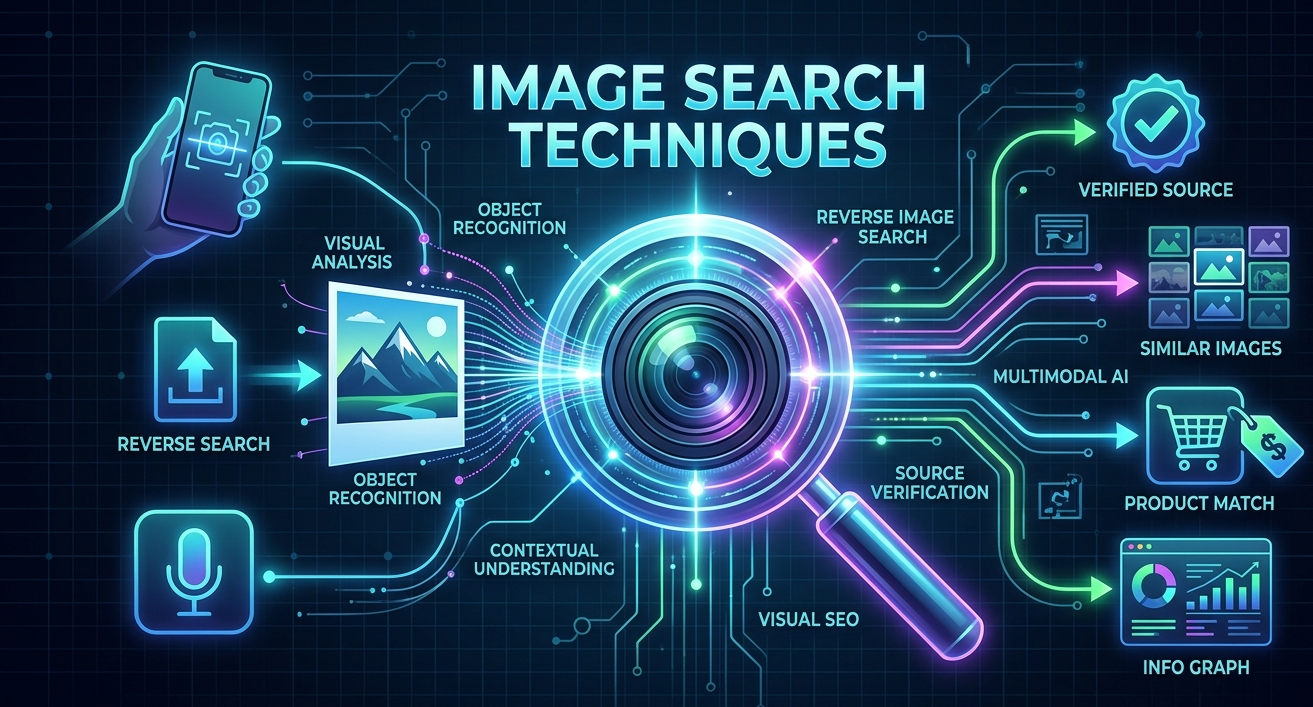
In an era where visual content dominates our digital landscape, the ability to find, verify, and optimize visuals has become a cornerstone of digital literacy. Whether you are a researcher, a marketer, or a curious individual, mastering image search techniques is no longer optional ,it is essential.
As of 2026, the evolution of search engines from simple keyword matching to complex multimodal AI has transformed how we interact with pixels. This comprehensive guide explores the most effective image search techniques, the technology driving them, and how you can leverage these tools for maximum efficiency.
1. Understanding the Evolution of Visual Discovery
To appreciate modern image search techniques, we must look at how far the technology has come. In the early days of the web, search engines relied entirely on text-based metadata. If an image wasn’t tagged with “sunset,” it was invisible to a user searching for one.
Today, we operate in a Semantic and Multimodal Era. AI models like Gemini 3 Flash and GPT-5 now “see” images much like humans do. They understand context, emotion, style, and intent. This shift has given rise to sophisticated image search techniques that allow us to query the web using images themselves, or even complex descriptions that describe a “vibe” rather than just an object.
2. Fundamental Image Search Techniques
Before diving into advanced AI tools, every user should master the foundational image search techniques available on major platforms like Google, Bing, and DuckDuckGo.
A. Advanced Keyword-Based Search
Standard keyword searching is the most common technique, but few use it to its full potential. To refine your results:
- Exact Match: Use quotation marks around your keywords (e.g.,
"minimalist Bauhaus architecture") to find specific styles. - Exclusion Operators: Use the minus sign to remove irrelevant results (e.g.,
jaguar -carto find the animal). - File Type Filtering: In 2026, searching for specific formats like
.webpor.svgis crucial for designers. Use the operatorfiletype:pngto narrow your results.
B. Reverse Image Search
Perhaps the most powerful of all image search techniques, reverse search allows you to upload a file or paste a URL to find its source.
- Verification: Use this to check if a profile picture is a stock photo or to find the original photographer of a viral meme.
- Higher Resolution: If you have a grainy thumbnail, a reverse search can lead you to the high-definition original.
3. Cutting-Edge AI and Multimodal Search Techniques
The year 2026 has introduced “Multimodal AI,” where the boundaries between text, voice, and vision are blurred.
Visual Intent Mapping
Modern image search techniques now involve “Intent Mapping.” Instead of just showing you similar-looking pictures, AI analyzes why you are searching. For example, if you upload a photo of a broken appliance, the search engine identifies the model and immediately suggests “repair tutorials” or “replacement parts” rather than just more photos of broken machines.
Google Lens and Real-Time Discovery
Google Lens has evolved into a real-time concierge. By pointing your camera at an object, you are employing an “active” image search technique.
- Copy and Paste: You can “grab” text from a physical book and paste it into a digital document.
- Style Match: Identify furniture in a restaurant and find where to buy it online instantly.
4. Top Tools for Image Search Techniques in 2026
While Google remains the giant, several specialized tools offer unique image search techniques for specific niches.
| Tool | Best Used For | Key Feature |
| TinEye | Copyright & Tracking | Excellent at finding exact matches and modified versions. |
| Yandex Images | Face Recognition | Highly accurate for identifying people and landmarks. |
| PimEyes | Privacy Monitoring | A dedicated face search engine to find where your face appears online. |
| Pinterest Lens | Lifestyle & Decor | Uses visual “vibes” to suggest aesthetic matches. |
| Bing Visual Search | Shopping | Allows you to crop specific parts of an image to search for just that item. |
5. Image Search Techniques for SEO and Content Creators
If you are on the other side of the screen—the creator—understanding image search techniques is vital for getting your content discovered. This is where “Visual SEO” comes into play.
Semantic Alt Text
Gone are the days of keyword stuffing. In 2026, the best image search techniques for SEO involve writing descriptive, human-readable Alt Text. Instead of “blue-shirt-man,” use “a professional man in a navy blue linen shirt presenting a graph at a tech conference.” This provides the semantic context AI needs to categorize your image correctly.
Structured Data (Schema Markup)
Using ImageObject schema allows you to tell search engines exactly what is in your photo. This is especially important for:
- Recipes: Showing a thumbnail and calorie count in search results.
- Products: Displaying price and availability directly in image search.
6. Verifying Authenticity: The “Fact-Check” Technique
With the rise of generative AI, distinguishing between a real photograph and an AI-generated image is a critical skill. Advanced image search techniques now include “Forensic Analysis.”
- Metadata Extraction (EXIF Data): Tools like Jeffrey’s Image Metadata Viewer allow you to see the camera settings, date, and sometimes the GPS coordinates of a photo.
- Shadow and Reflection Analysis: Modern visual search tools can now highlight inconsistencies in lighting that suggest an image has been manipulated.
- Source Graph Mapping: This technique involves tracing an image back through its various uploads to find the earliest timestamped version, helping debunk misinformation.
7. The Future: “Search Without Searching”
As we move further into 2026, image search techniques are becoming proactive. “Vibe-based discovery” uses your browsing history and current environment to suggest visuals you might need before you even type a query.
Wearable tech, like AR glasses, utilizes persistent visual search. As you walk through a city, the glasses perform background image searches on landmarks, menu items, and even the outfits of passersby (within privacy regulations), providing an augmented layer of information.
Conclusion
Mastering image search techniques is about more than just finding a pretty picture. It is about navigating a complex digital ecosystem with precision. From using reverse search for fact-checking to optimizing your own images for AI-driven discovery, these skills empower you to interact with the world in a more informed and efficient way.
As AI continues to refine its visual “brain,” the gap between what we see and what we can find will eventually disappear. Stay curious, use the tools mentioned above, and remember that in 2026, an image is not just a file it is a gateway to a world of data.